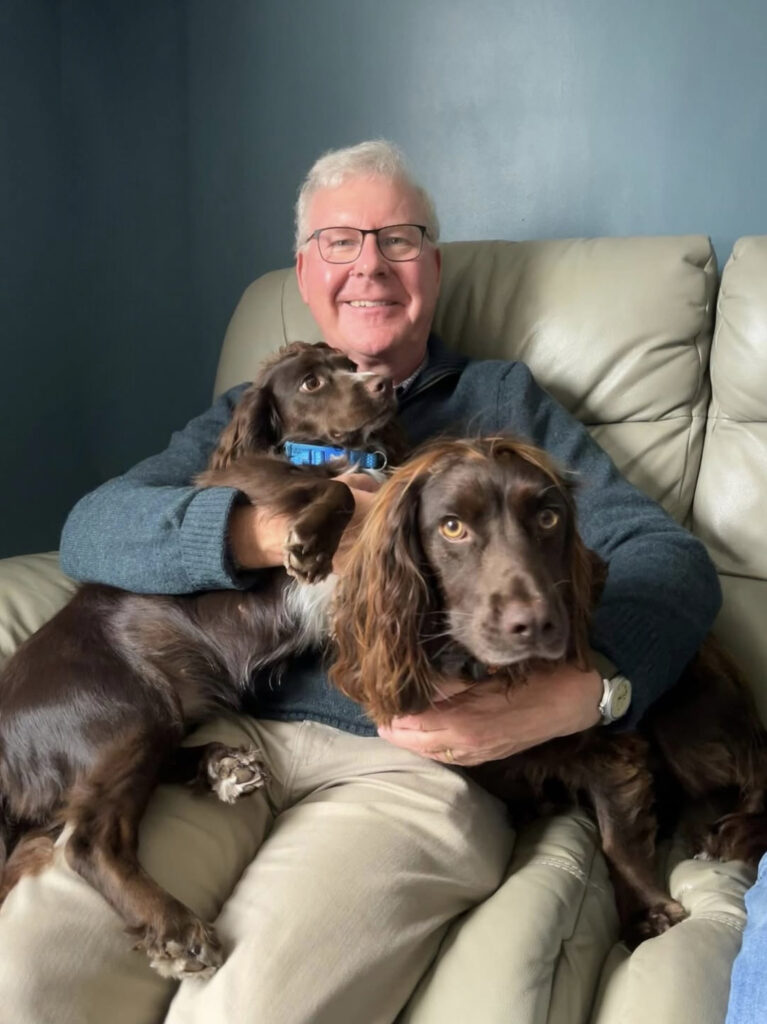
Since 2022 I have been Visiting Professor in Defence Studies, King’s College London.
I have taught in further and higher education since 1985. My experience ranges from teaching mixed ability classes, through undergraduate degree courses, to Master’s and Doctoral level.
Military education was my main focus for the first twenty years of my career, and I taught service personnel at every level from private to 4 Star. My experience was focussed on teaching officer cadets and junior officers (Army and Royal Marines) at RMA Sandhurst, and then middle ranking and senior officers (tri-service) at the JSCSC. As Land Warfare Historian on the Higher Command and Staff Course at JSCSC, I taught OF5 and OF6s, many of whom went on to the highest ranks of the services (at one point the heads of the British Army, Royal Navy and Royal Air Force were all my former students).
- 2006-13 – Professor of War Studies, Department of History, University of Birmingham
- 2012-13 – Visiting Professor, University of Buckingham
- 2005-06 – Professor of Modern Military History, King’s College London, based at the Joint Services Command and Staff College
- 1999 –2005 – Senior Lecturer in Defence Studies, King’s College London, based at the Joint Services Command and Staff College
- 1985-1999 – Lecturer/Senior Lecturer in War Studies, Royal Military Academy, Sandhurst
- 1996 – Visiting Professor, University of Southern Mississippi, USA
- 1995-1999 – Senior Research Fellow, De Montfort University (held concurrently with Sandhurst position)
I regularly lecture to local history societies, museums, schools and colleges, and literary festivals. Since 2013 I have frequently lectured on cruise liners all over the world.
I frequently lead educational and recreational parties to historic battlefields (including D-Day, Western Front 1914-18, Waterloo, US Civil War battlefields, and Gallipoli).
I am married to Viv, and we have an adult daughter and son, and four grandchildren My hobbies include cooking, walking, in the English countryside, wargames, boardgames, the theatre, watching classic films, travel, Arsenal FC, and music. I am a Liveryman of the Worshipful Company of Curriers, and I am an active member of Grove Parish Church.
A Q&A with Gary Sheffield
Tell us something about yourself. Where do you come from?
I was born in London in 1961, went to University of Leeds in 1979, and never quite moved back to the capital! We now live in Oxfordshire. However much of my family still lives in London. Although I was born and brought up south of the River, my late Dad was from North London, hence I am a lifelong fan of The Arsenal Football Club. I come from a very ordinary background.
I’m a product of twentieth century British social mobility: my grandparents were working-class, my parents first generation lower middle-class. I went to the local comprehensive (state) school and was the first member of my family to go to university. Recently, as I sat in my West End Club in my dinner jacket waiting to go to a dinner at my Livery Company, I wondered if I had joined the Establishment…
What about your family?
I am married to Viv, and in a few years we will be celebrating our Ruby wedding anniversary (unbelievably! Where’s the time gone?) We have two children, both now married and with kids of their own. In a space of two and half years we went from having no grandchildren to having four, including twins. Also, thanks to our son and daughter-in-law, I have a granddog – a cocker spaniel called Wanda.
How did you become a military historian?
To be honest, I never thought that I would end up making a living as a military historian. I really wanted to, having been fascinated with the subject from a very young age, but opportunities were limited. I did a History degree at Leeds University. Very unusually, Leeds had several academics who were interested in military history, and I took their courses. I then did a Research MA at Leeds, on a Kitchener Army battalion of the Great War, but at the end of it found myself applying, without much enthusiasm or success (the two facts were probably linked) for classic ‘Milk Round’ graduate jobs – management trainee with British Gas among others – with the idea of carrying on doing research and writing in my spare time.
Then, a one-year lecturing post in the Department of War Studies at the Royal Military Academy Sandhurst was advertised in the Guardian. I applied for it, was interviewed for it, and to my amazement I was appointed. That was in 1985. At the end of my first year, I was made permanent. I then did a part-time PhD at King’s College London, and somehow, eventually I found myself with a long career as a military historian. Without any false modesty I can say I have made the most of the certain amount of talent I have, and I’ve worked very hard to take advantage of the major opportunity that came my way when I got that job at Sandhurst. That was my big break.
Was there a turning point in your career?
Well, two things happened in the space of a few years which made a big difference to me. First, in 1999, I was appointed as a Senior Lecturer in the Defence Studies Department (DSD) of King’s College London (KCL) which provided the academic support for the recently formed Joint Services Command and Staff College (JSCSC), which is now part of the Defence Academy of the UK. This was huge for me. I mostly enjoyed my time at Sandhurst, but it was a bit limiting. We were civil servants, which placed restrictions on what we could do, write and say, and moving to a mainstream university was a breath of fresh air. Also, having been teaching officer cadets and junior officers, I was now dealing with much more senior military personnel, especially when I served as the Land Warfare Historian on the Higher Command and Staff Course. This was for officers being groomed for the highest positions. At one stage the heads of the Royal Navy, the Army, and the Royal Air Force were all my former students on the HCSC. It was an amazing privilege. Now I am back as a Visiting Professor at DSD, I am once again rubbing shoulders with senior military, and I feel that I am back in my deep comfort zone.
Second, I wrote a book called Forgotten Victory: The First World War – Myths and Realities. This was published by a ‘trade’ publisher in 2001. Unlike my previous academic books which had all been pretty well received by the limited number of people that read them, this one got into high street bookshops and in fact became a best seller. In Forgotten Victory I put together a positive argument about Britain’s role in the First World War. Partly this was a synthesis of existing scholarship but I also contributed some original material. It was written in an accessible way, intended for a lay rather than a scholarly audience, but slightly to my surprise I found it being taken seriously by scholars (I received an extremely bad review from a non-specialist who simply revealed how little he actually knew about the subject). For whatever reason, it caught folks’ imaginations and suddenly people outside a narrow circle knew who I was. These two events, moving to KClLand publishing Forgotten Victory, decisively changed the course of my career.
So you enjoyed your time teaching the military. Why then did you leave the Defence Academy?
I was in my mid-forties and had reached the stage where I was in the frame for a Professorial Chair. I was getting a bit stale and, to be frank, my career was not being well-managed. Although KCL awarded me with a Personal Chair, I felt I had to leave to make progress in my career. I am delighted to say that over the last two decades senior personnel has changed, and career management has improved dramatically. Now there are a number of colleagues who are in roughly the same position that I was in in 2005-6, and their careers are being managed effectively, and they are very happy to stay. Things have definitely improved, and the senior management deserve great credit for this state of affairs.
What happened next?
In 2006 I was appointed as Chair of War Studies at the University of Birmingham. Let’s just say that things did not work out, I was miserable, and I was absolutely delighted to be headhunted by the University of Wolverhampton, a dozen miles down the road. In 2013 I was awarded the Chair of War Studies there. This meant working with good friends and excellent scholars such as Professor John Buckley, Professor Stephen Badsey and Dr Spencer Jones, all of whom I knew before my appointment. My move more-or-less coincided with the centenary of the First World War, and my main effort was spent in building up Wolverhampton’s profile as a major centre for military history.
I had a wonderful time at Wolves, but by the time my 60th birthday was approaching I decided that I wanted to retire. I was far too senior and important for my own good, and I was getting fed up with admin, management, and sitting on committees. Although my birthday is in the summer I was asked to stay on until the end of the year. I retired on Christmas Eve 2021. I remember glancing at my watch at midnight as Christmas Eve turned into Christmas Day and thinking, “well you’re now properly retired!”
I had done some bit and pieces for Buckingham University over the years, and I was asked to succeed Professor Saul David in running their military history programme. I did this part-time job for three years until I handed it over to Dr Stuart Mitchell, a Sandhurst War Studies academic and one of my former PhD students. I have reverted to doing occasional work for Buckingham.
How did you end up back at the Defence Academy?
When I was offered the Chair at Birmingham, I was very torn, as I knew I would miss DSD. Actually, I stayed in touch. I had lots of friends there, continued to see people socially, was invited back to give guest lectures and to be an external examiner, and was fortunate to be allowed to continue to use the JSCSC Library. When I retired from Wolves, I wanted to return to DSD in some shape or form. I was exceptionally lucky that the then head of Department, Professor Niall Barr, enthusiastically supported my application to become a Visiting Professor, and his successor, Professor Kate Utting, similarly went out of her way to champion its renewal. As Kate said to me the other day, “you can check out any time you like, but you can never leave!” I am thoroughly enjoying my second stint in DSD, not least the teaching, as I have missed it. People have been amazingly welcoming, and in addition to renewing links with former colleagues, I have made a lot of new friends among the younger generation. DSD is a wonderful community to be a part of, and I feel blessed to be back.
Who have been your influences as a historian?
I have been very fortunate throughout my career to have had some excellent mentors, and I have tried to put something back by in turn mentoring younger scholars. John Wyatt, my history master at Raynes Park High School, was my first mentor, followed by Dr Hugh Cecil and Professor Edward M. Spiers at the University of Leeds, my PhD supervisor Professor Brian Bond at KCL, Professor Peter Simkins of the Imperial War Museum, and Professor Richard Holmes, Dr John Pimlott, and Mr Keith Simpson, who all took me under their respective wings when I was a very junior lecturer at Sandhurst. They all gave me excellent advice and much encouragement.
More broadly, I have been influenced in my development as a historian by the likes of Martin Middlebrook, John Terraine, Professor Sir Michael Howard, Professor Sir Hew Strachan, Professor Paul Addison, Professor John Bourne, Professor Christopher Duffy, and Professor David French, all of whom I got to know. Among my peers, several longstanding friends have been big influences, especially Dr Christina Goulter, Professor Jeremy Crang, Professor Stephen Badsey, Professor Niall Barr, Professor Lloyd Clark, Professor Saul David, Professor John Buckley, the late Professor Jeffrey Grey, and Professor Andrew Wiest. And now I am benefitting from the scholarship and friendship of younger generations, not least Professor Catriona Pennell, Dr Spencer Jones, Dr Aimee Fox, Dr Jenny Macleod, and my DSD colleagues Professor Jonathan Fennell, Professor Huw Davies, Dr. Alex Wilson and Dr Will Fletcher. Apologies to anyone I’ve missed out!
How have you developed as a historian over the years?
Well, some historians might point to reading Tacitus and Gibbon as their starting points for the study of history, I’m afraid that with me it was a combination of Ladybird books (the ones on Nelson and Napoleon were particularly influential) and Airfix kits and toy soldiers. By my early teens I was reading some fairly serious books on history, not just military history, to the extent that I lied about my age at our local library to get an adult ticket. Being born just 16 years after the end of the Second World War, that conflict loomed very much in the background of my childhood, and I became fascinated with it. At the age of 13 I read a book on the First World War which made me very interested in 1914-18.
I was always interested in the social and political history of war as well as generals, tanks, trenches and bayonets, and at Leeds University I was given the chance to undertake some serious study of the Great War when I took Hugh Cecil’s special subject. I was very much a war and society historian at that time, not least because describing yourself as a military historian was an excellent way of not getting interviews for jobs. Once I was at Sandhurst however, I started to focus on tactics and operations as well as the war and society stuff., especially morale. My 2001 book Forgotten Victory was the offshoot of this work.
Once I moved to the JSCSC and found myself teaching on the Higher Command and Staff Course, it made sense to work on senior commanders. That led me to study Field Marshal Sir Douglas Haig, and I ended up co-editing an edition of his diary and letters, writing a biography which appeared in two editions, and editing a book of Haig family correspondence. Undoubtedly, teaching officers training for high command and senior staff positions was hugely helpful while working on the top echelon of the British Army in the First World War. I have always been open to different ways of approaching history, and in recent years combining elements of gender history, psychology, and sociology has enriched my work.
Although much of my career has been devoted to studying the Great War, I’ve always had a very strong interest in the Second World War, and that is reflected in my recent publications and in the book that I am writing, which examines the experiences of British and Dominion soldiers in 1914-18 and 1939-45. If the two world wars are my ‘majors’, my ‘minors’ are the American Civil War and the Revolutionary and Napoleonic Wars. So far, I have published very little in these fields, apart from a very short biography of the Duke of Wellington, but watch this space for future developments!
Apart from that, I have a general fascination with history of all periods. Recently I have become extremely interested in the ancient Greeks, from the Minoans to the Hellenistic period; and for about 30 years I have been fascinated by the Byzantine Empire.
What other interests do you have? How do you relax?
I am fortunate to be part of a big and pretty close family. My wife is one of five children and so her side of the family is huge. We spent a fair amount of time grandparenting, which is an absolute joy. A highlight of every year is when we, plus kids and grandkids and granddog, have a holiday on the south coast of England somewhere. My wife and I also get a lot of very interesting travel, not least through my lecturing on cruise ships. I am still in touch with friends from my school and university days, and we meet up for a meal or a drink every now and again. My best mate is a university friend, who was not a historian, who I met in my second week at Leeds. I was his best man, he was my best man, we are godparents to each other’s eldest kids, and his lot are more like family than just friends. For those in the know, our relationship has been described as like the two granddads in Peppa Pig!
We live very close to the countryside, which means we are able to do a lot of walking. One of my hobbies is cooking and I like entertaining around the dinner table. I read for pleasure, although not as much fiction as I should, and listen to audiobooks and a lot of music. My taste is pretty broad although I must confess that I am a fanatical Bob Dylan fan, and my favourite band is Fairport Convention (yes, I know that dates me). I have been known to go to the pub for a few pints (real ale, not lager of course). I watch sport, especially football, on the television, and very occasionally watch it live. I enjoy wargaming, playing board games, and even sometimes watch the television. My favourite ever show is The West Wing, and at the moment I am enjoying Slow Horses.
Do you have any strong beliefs?
Yes, I am a Christian, and I am involved with my local Anglican church. My faith has influenced my politics, which are progressive. I want to keep politics away from this website, but if anyone wants a taste of my views, follow me on Bluesky.
What are your future plans?
If I am spared (!) I’ll carry on doing what I’m doing now. I am thoroughly enjoying life at the moment. I am aiming to get my manuscript for my book to the publishers in summer 2026, and once that is out of the way I can turn my attention to my next writing project. This is under wraps, but I hope to go public with it before too long.
Academic distinctions (most recent first)
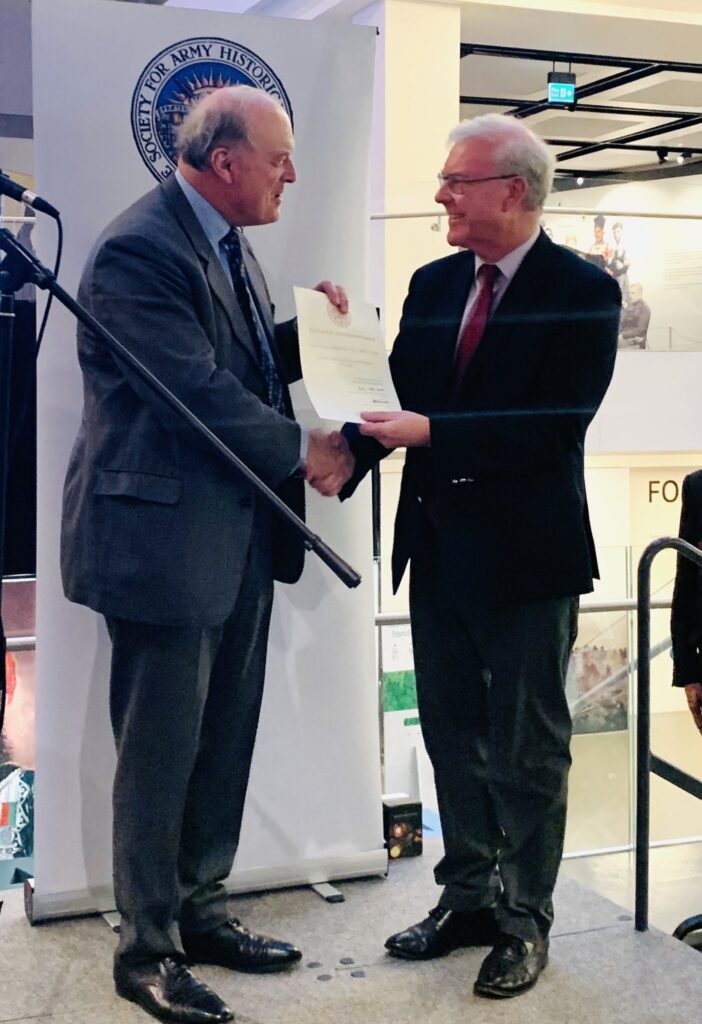
2023 – Elected as Fellow of the Army Historical Society
2019 to date – Honorary President, Western Front Association
2016 – Lead Historian on Operation Reflect, British Army’s Staff Ride to commemorate the Centenary of the Battle of the Somme.
2013 to 2018 – Advisor to UK Government Department of Culture, Media and Sport, and to British Army, on Centenary Commemorations of First World War
2012 – Short-listed for Duke of Westminster’s Medal for Military Literature, for The Chief: Douglas Haig and the British Army (Aurum, 2011)
2012 to 2019 – President of the International Guild of Battlefield Guides
2010 to 2019 – Vice President, Western Front Association
2008 – Elected as a Churchill College, Cambridge University Archives By-Fellow
2005 – Short-listed for Templer Medal: Command and Control on the Western Front: The British Army’s Experience 1914-18(Spellmount, 2004). (Co-editor with Dan Todman)
2003 – Elected as a member of Common Room of Wolfson College, Oxford University
2003 – Shared Templer Medal for contribution to David French and Brian Holden Reid (eds.) The British General Staff: Innovation and Reform (London, Cass, 2002)
2000 – Short-listed for Templer Medal: Leadership in the Trenches: Officer-Man Relations, Morale and Discipline in the British Army in the Era of the First World War (Macmillan, 2000)
1989 -96 – Secretary General of the British Commission for Military History
Membership of learned societies (most recent first)
2007 – Elected as a Fellow of the Royal Society for the Encouragement of Arts, Manufactures and Commerce
2001 – Elected as a Fellow of the Royal Historical Society
Invitations to Speak (selected recent events)
- Elected as a Fellow of the Royal Society for the Encouragement of Arts, Manufactures and Commerce
2001. Elected as a Fellow of the Royal Historical Society
Invitations to speak (selected recent events)
International
2025 – Gave paper as part of panel at Society for Military History conference, Mobile, Alabama
2024 – Invited speaker at University College, Dublin
2018 – Keynote speaker, ‘Manpower and the British Empire’ conference, Royal Military College, Kingston, Canada
2018 – Invited speaker at Syracuse University, USA
2018 – Invited speaker at Australian National University
2018 – Invited speaker at Massey University, New Zealand
2017 – Keynote speaker, Graduate student conference, Ohio State University, USA
2017 – Keynote speaker, Canadian Military History conference, Waterloo, Ontario
2016 – Gave paper as part of panel at Society for Military History conference, Ottawa, Canada
National
2024 – Invited speaker on ‘Football and War’ panel at National Army Museum
2019 – Keynote speaker, ‘Legacy of the First World War’ conference, National Army Museum, London
2018 – Invited speaker, The Franco-British Society, Lancaster House, London
2018 – Invited speaker, Imperial War Museum North
2016 – Invited speaker at Royal College of Defence Studies, London
My own education
1986-1993 – King’s College London (part-time). Ph D in War Studies (1994)
1983-1984 – University of Leeds. MA (by research) in History (1985)
1979-1982 – University of Leeds. BA (Hons.) History (2:1)
1974-79 – Raynes Park High School, London SW20